

This article is general marketing information, not legal advice. Advertising rules for regulated health services are set out in the Health Practitioner Regulation National Law and Ahpra’s guidelines. Check Ahpra’s advertising hub or your professional body before publishing, because requirements can change.
In a regional town, a new patient often starts the same way: a quick search on their phone. “Physio Armidale”, “dentist Orange”, “bulk billing GP near me”. The practice that shows up with a clear profile, credible practitioners and easy booking gets the appointment.
Healthcare SEO is different from selling plumbing or accounting. Google treats health information as a high-stakes subject, and Australian law restricts how regulated health services can be advertised. Get both right and you build durable trust. Get either wrong and you risk poor rankings, patient confusion or a complaint to the regulator.
Why health is held to a higher standard
Google’s quality systems give extra scrutiny to topics that can affect a person’s health, safety or finances. Google’s guidance for evaluating content centres on experience, expertise, authoritativeness and trustworthiness, known as E-E-A-T, and for health topics trust is the most important part.
In practice, that means a practice website should make it obvious:
- Who is treating patients, with names, qualifications and registration details
- What the practice actually offers
- Where it’s located and how to contact it
- How the information on the site was written and reviewed
A page about knee pain written by an anonymous marketer is weak. A page written or reviewed by the treating physiotherapist, with their credentials and a clear update date, is strong.
Know the advertising rules first
Section 133 of the National Law restricts how regulated health services can be advertised. Under Ahpra’s guidelines, advertising must not be false, misleading or deceptive, must not create unreasonable expectations of benefit, must not encourage unnecessary use of services, and must not use testimonials or purported testimonials about the service or business.
A few points that matter for SEO:
Your website counts as advertising. So do your social media pages, if you use them to promote the practice.
Testimonials. Ahpra defines a testimonial as recommendations or positive statements about the clinical aspects of a regulated health service. They can’t be used in your advertising, including on your website and social pages. Embedding a live Google review feed that pulls in clinical praise is a common trap.
Third-party platforms are treated differently. Ahpra’s guidance says reviews posted on platforms you don’t control, such as Google, aren’t considered within your control, so you’re not expected to remove them. That doesn’t remove the care you need when inviting reviews: ask all patients rather than a hand-picked few, and never reward or pressure people into leaving positive reviews.
Editing reviews is risky. Ahpra has warned that selectively editing reviews or testimonials may break the law.
The law may change. Proposals to lift the testimonial ban have been discussed for years, but as of October 2026 secondary sources and Ahpra’s own materials still describe the prohibition as in force. Don’t plan around a change that hasn’t happened, and check Ahpra’s testimonials guidance for the current position.
Our broader guide to getting more Google reviews in Australia without breaking the rules covers general review practice, but for regulated health practitioners, Ahpra’s rules sit on top.
Step 1: Build credible practitioner pages
Each practitioner should have a page of their own with:
- Full name, title and registration details
- Qualifications and areas of focus
- Years of experience and where they trained
- A professional photo
- The conditions or services they treat
- A clear booking link
Avoid superlatives like “best”, “leading” or “number one” unless you can substantiate them, because unsupported claims can fall foul of advertising rules.
Step 2: Create accurate, patient-first service pages
Create a page for each key service, for example “Physiotherapy for lower back pain” or “Children’s dentistry”. Each should explain:
- What the service is and who it’s for
- What a first appointment involves
- Realistic expectations, without promising outcomes
- Fees, rebates and bulk billing information where applicable
- How to book, and how to reach the practice
Avoid language that implies guaranteed results, and avoid before-and-after claims that could mislead.
Step 3: Treat clinical content like clinical content
Educational articles can build authority and bring in patients searching for information. But they should be:
- Written or reviewed by a qualified practitioner, with the reviewer named
- Dated, with a “last reviewed” line
- Referenced to credible sources such as government health bodies and peer-reviewed research
- Cautious about diagnosing or giving treatment advice that should come from an in-person assessment
Avoid mass-produced AI articles with no clinical review. They tend to be generic, can contain errors, and are exactly what quality systems are designed to discount.

Step 4: Optimise your Google Business Profile carefully
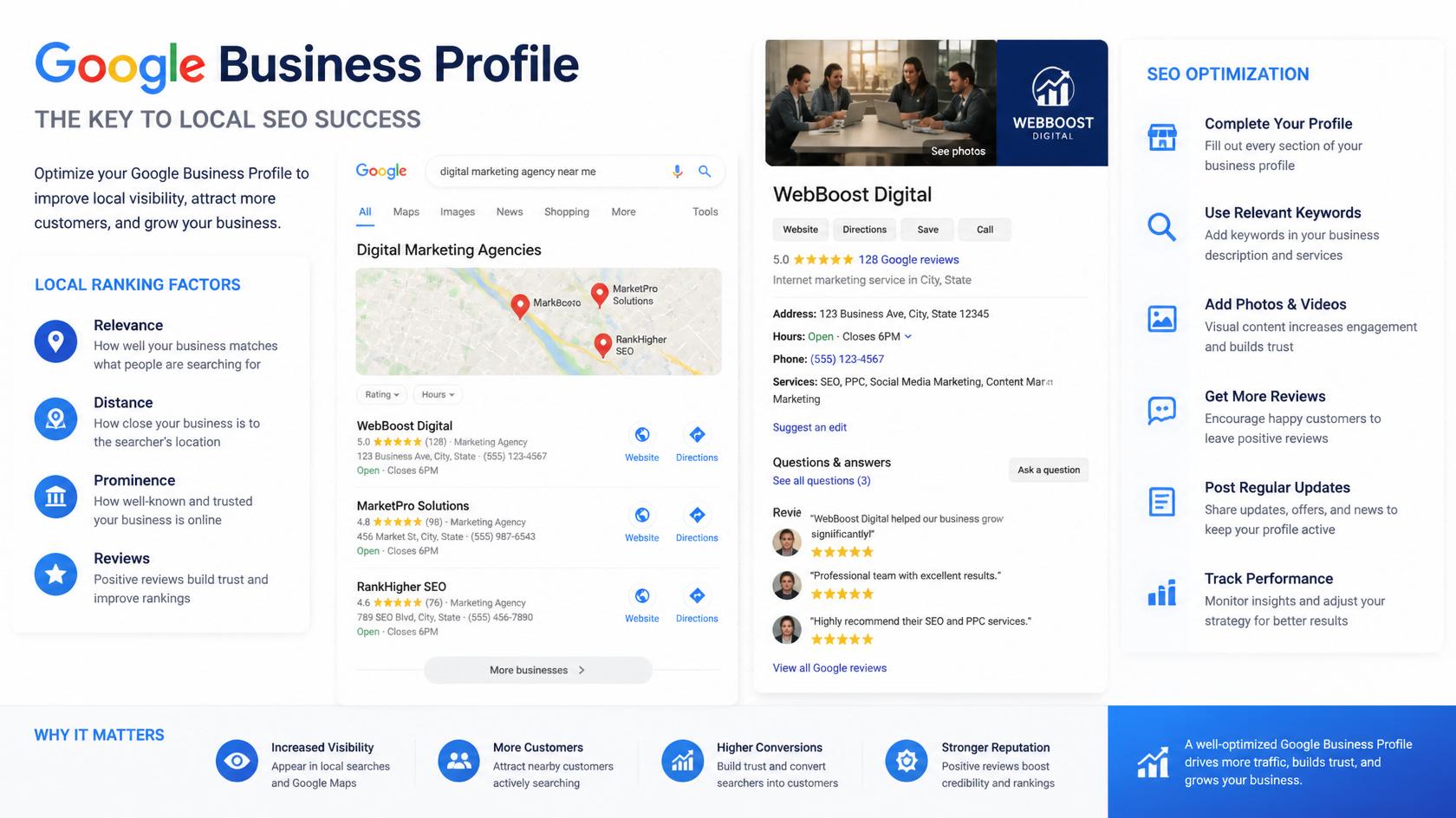
For most local health searches, the map pack carries a lot of weight. Pick the right primary category, such as “Physiotherapist”, “Dentist” or “General practitioner”, keep hours and contact details accurate, add real photos of the clinic and team, and connect your booking link. Our Google Business Profile optimisation checklist covers the details.
Be cautious with profile posts and descriptions: they count as advertising too.
Step 5: Get the technical and accessibility basics right
Patients are often on mobile, sometimes in pain or under stress, so friction costs bookings.
- Fast mobile loading (aim for Google’s recommended thresholds of 2.5 seconds for largest content, 200 milliseconds for interactions and 0.1 for layout shift)
- Simple navigation with booking and phone buttons prominent
- Secure HTTPS and a clear privacy policy, especially if you collect patient details through forms
- Accessible design with readable text and good contrast
- Clear contact and emergency information (for example, “if this is an emergency, call 000”)
If your site is overdue for a rebuild, read our website redesign SEO migration checklist first, then talk to our web design and development team.
Step 6: Handle patient privacy properly
Never publish patient information, images or stories without proper consent and without checking whether publishing breaks advertising rules. Be careful with online forms and tracking tools that could capture health details, and make sure your privacy policy reflects what you collect. If in doubt, take advice from your professional body or a lawyer.
Step 7: Don’t forget regional context
Regional patients often travel, wait longer for appointments and care deeply about continuity. That’s useful content: how far you draw patients from, whether you offer telehealth, how to get an appointment, what to expect at a first visit. If you’re in a hub like Orange, Wagga Wagga or Dubbo, your patients may be driving in from surrounding towns, and your site should make that easy.
What to avoid
- Publishing patient testimonials or embedding review feeds with clinical praise on your own site
- Cherry-picking or editing reviews
- Rewarding patients for reviews
- Claims like “best in town” without evidence
- Anonymous or unreviewed health articles
- Copying generic condition pages that add nothing original
- Promising outcomes
How we work with health practices
We’re a digital marketing agency that’s been working with Australian businesses since 2019, and we take a cautious, white-hat approach to regulated industries. Our search engine optimisation and local SEO work for health practices focuses on credible content, accurate profiles and technical performance. We don’t write clinical advice: the practitioners do, and we help present it clearly. Responsibility for advertising compliance remains with the practitioner, so we recommend you check requirements with Ahpra or your professional body.
If you’d like to see where your site stands, ask for a free SEO analysis.